Teacher Explains
✨ What is Photosynthesis?
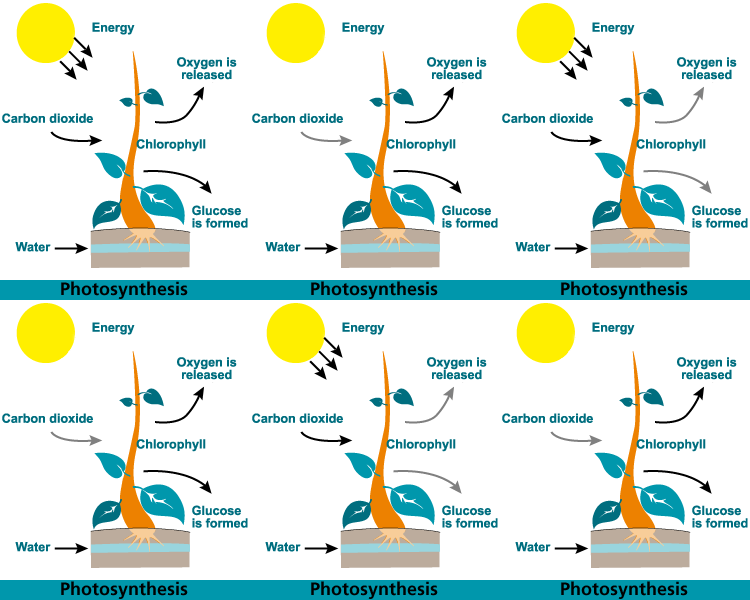
Alright class, let's talk about one of the most important processes on Earth: photosynthesis. This is how plants, algae, and some bacteria take light energy from the sun and turn it into chemical energy they can use to grow.
✨ The Two Main Stages
They do this amazing work inside special parts of their cells called chloroplasts. The whole process can be summed up with a famous chemical equation: six molecules of carbon dioxide plus six molecules of water, with the help of sunlight, produce one molecule of glucose sugar and six molecules of oxygen. Now, inside those chloroplasts, there are two main stages.
✨ Inside the Chloroplast
First, we have the light-dependent reactions. These happen in structures that look like stacks of pancakes, called thylakoids. Here, sunlight is captured, water is split apart, and oxygen is released as a byproduct.
✨ The Chemical Equation
This stage also produces energy-carrier molecules called ATP. The second stage is called the Calvin cycle, or the light-independent reactions. This happens in the fluid-filled space of the chloroplast called the stroma.
✨ The Importance of the Process
Here, the plant uses the ATP from the first stage, along with carbon dioxide from the air, to build glucose. This glucose sugar is the plant's food and its stored chemical energy. So, from sunlight, water, and air, a plant makes its own lunch and gives us the oxygen we breathe!
