Teacher Explains
✨ Aims of British Education
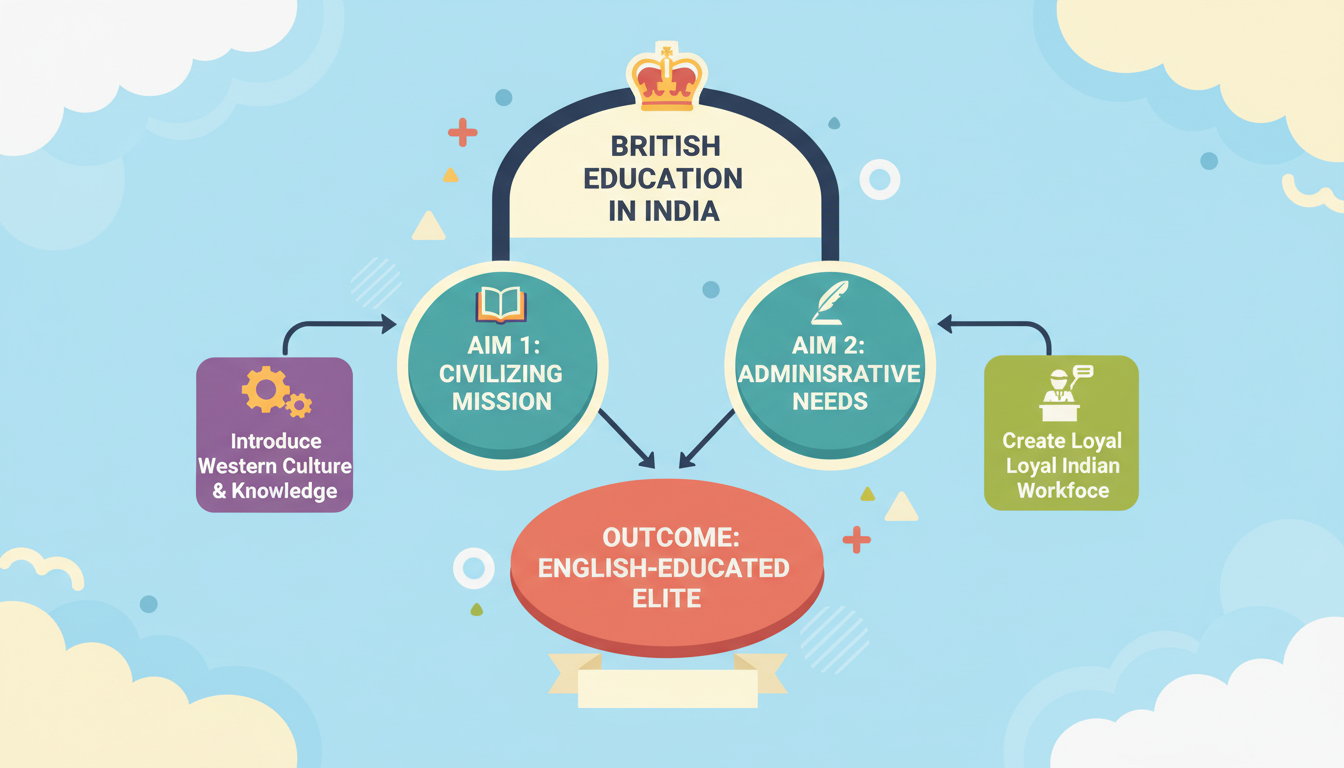
Alright class, today we're going to explore the aims of British education in India. It wasn't just about economics; the British also believed they had a duty to 'civilize' India, as they saw it back then. So, what were the main goals the British were trying to achieve through their education policies? What did they consider the qualities of a 'good citizen,' and how did they use education to try to shape Indians into that ideal?
✨ The British Perspective
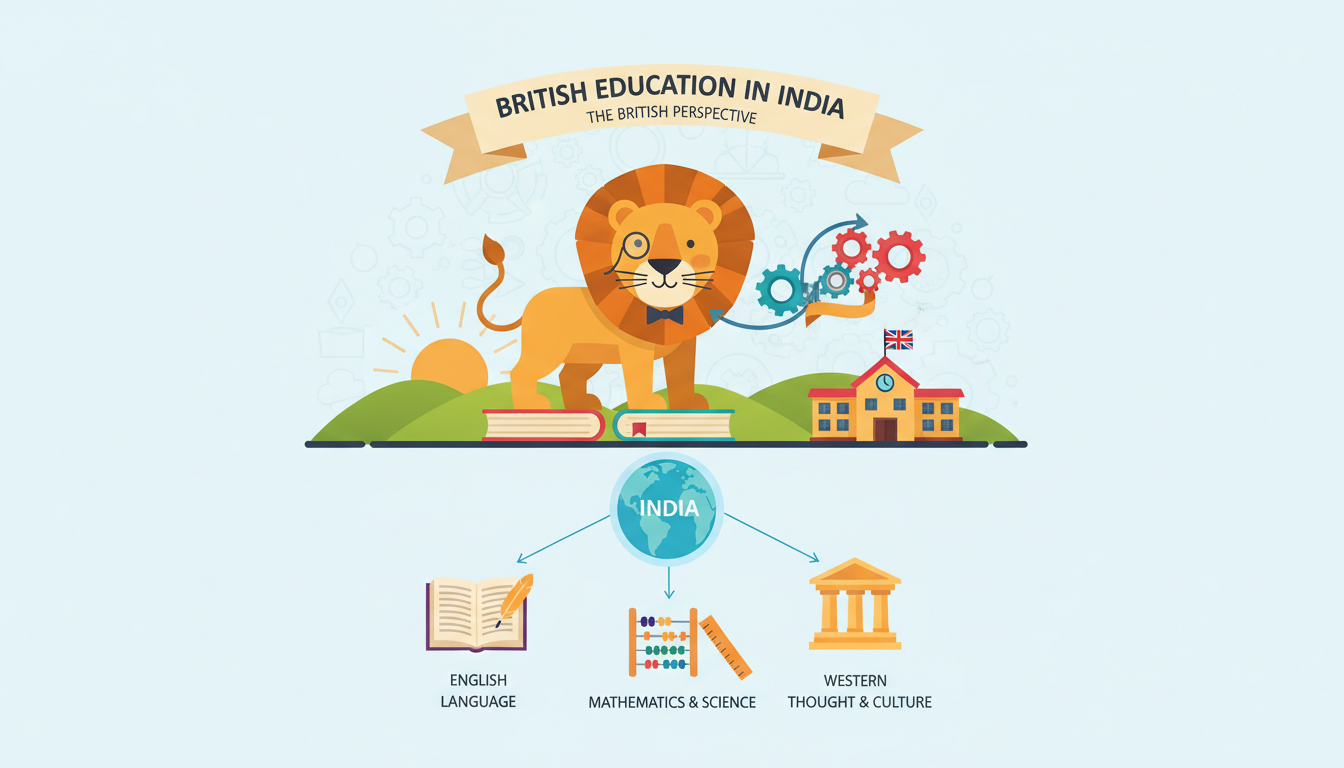
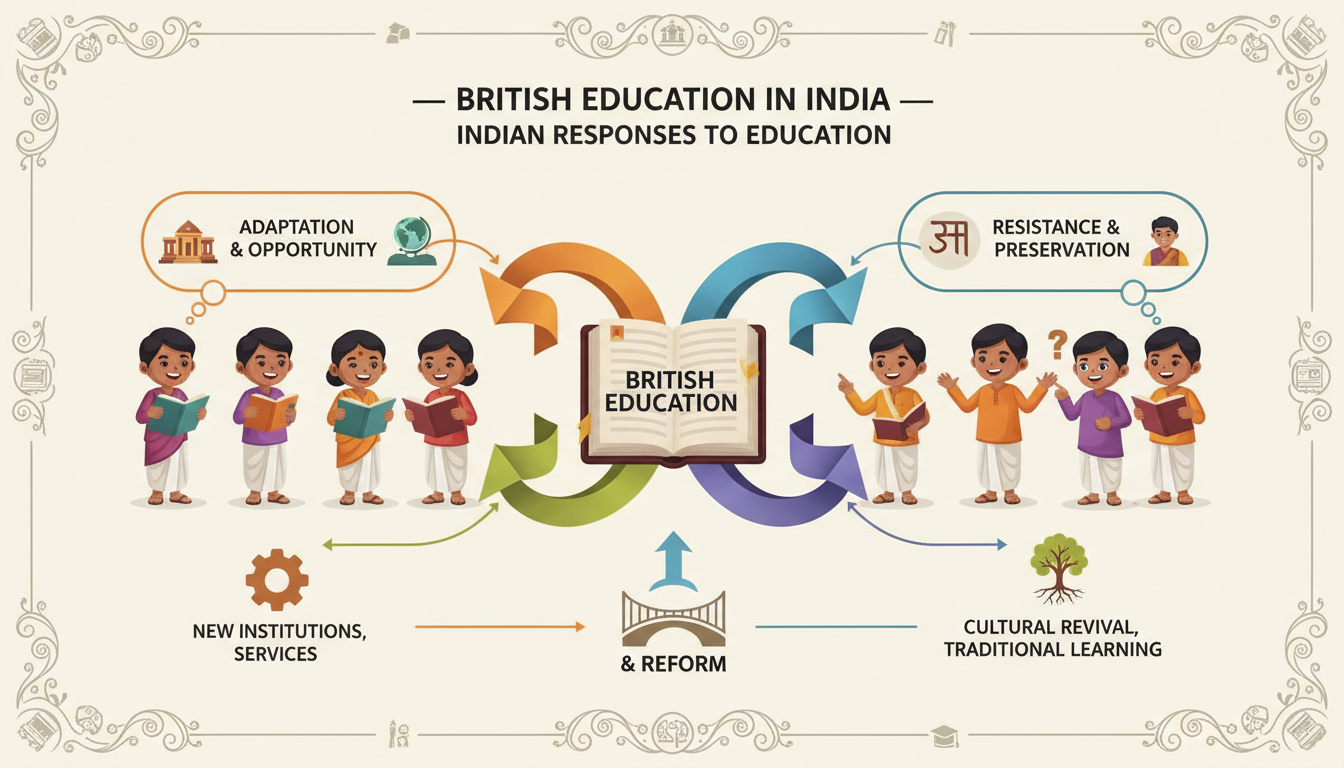
We'll also be looking at how these educational plans were actually put into action and the lasting effects they're still having today. Plus, we'll discuss how Indians reacted to these policies and how they developed their own ideas about what education should be.
✨ Indian Responses to Education
To begin, let's talk about 'Orientalism' and the interesting story of William Jones. Jones arrived in Calcutta in 1783 as a judge, and he was an amazing linguist. He was really eager to learn Sanskrit, and he studied with local pandits.
✨ Orientalism and William Jones
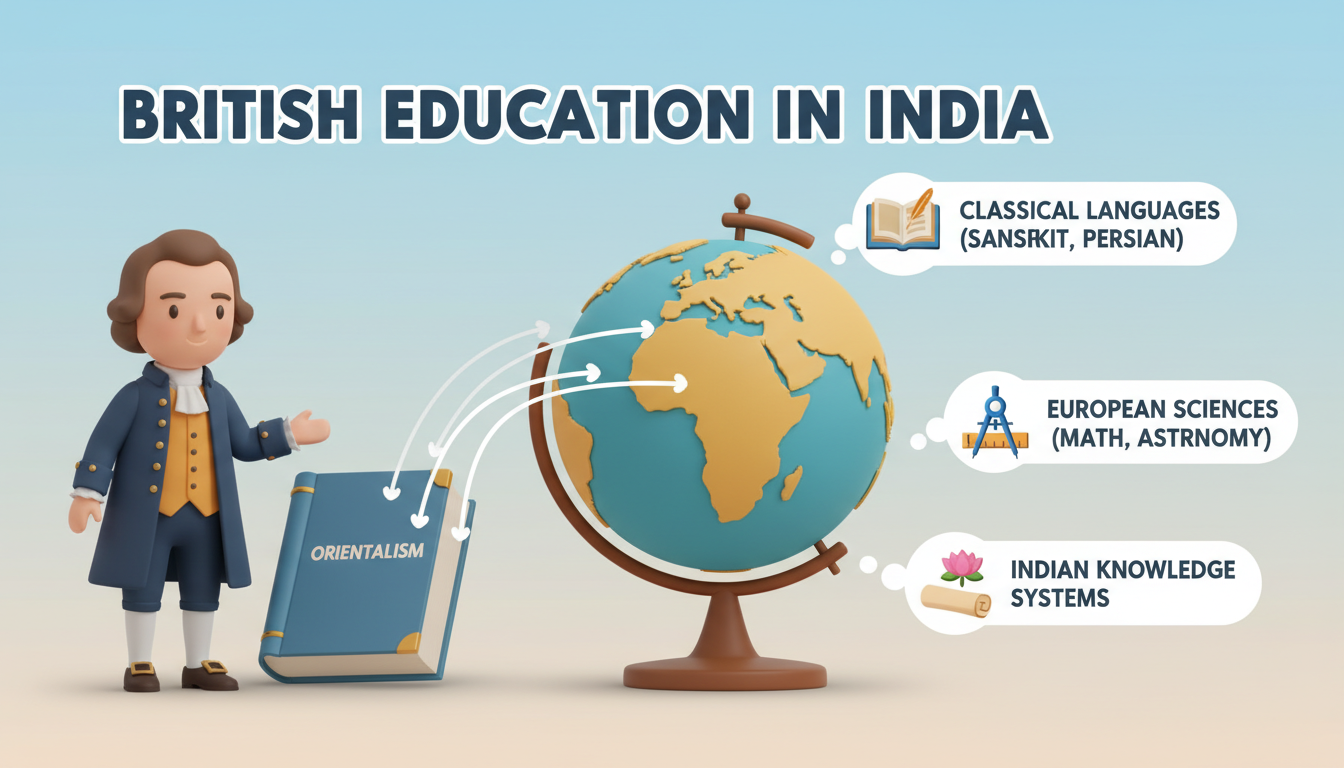
His story shows how complicated British involvement in Indian education really was. It wasn't just a simple, one-way kind of influence.
